
Don’t Just Toss It: 4 Pro-Loading Techniques to Pack 20% More Junk into Your Roll-Off Bin
Renting a bin is the first step toward reclaiming your home from clutter. However, once that large steel container arrives on your St. Marys or Stratford driveway, a new challenge begins. How do you ensure every cubic yard you paid for is actually used?
Most people start their project by tossing items over the side without a plan. Within an hour, the bin looks full, but if you looked closely, you would see massive gaps and “air pockets” between a tangled bicycle and a jagged piece of old wood. This is the “Swiss Cheese” effect. It leads to the “Walk of Shame”—that moment you realize the bin is full but your garage still has three heavy boxes left sitting on the floor.
Learning how to load a dumpster correctly is about more than just being tidy. It is a financial strategy. By using a few simple techniques, you can pack up to 20% more into the same space, effectively getting more value for every dollar spent on your rental.
The Foundation Layer: Flat Items First
The most common mistake in junk removal is starting with bulky, awkward items. When you throw a round chair or a pile of branches in first, you create a bumpy, uneven floor. Everything you put on top will sit at weird angles, creating voids that can never be filled.
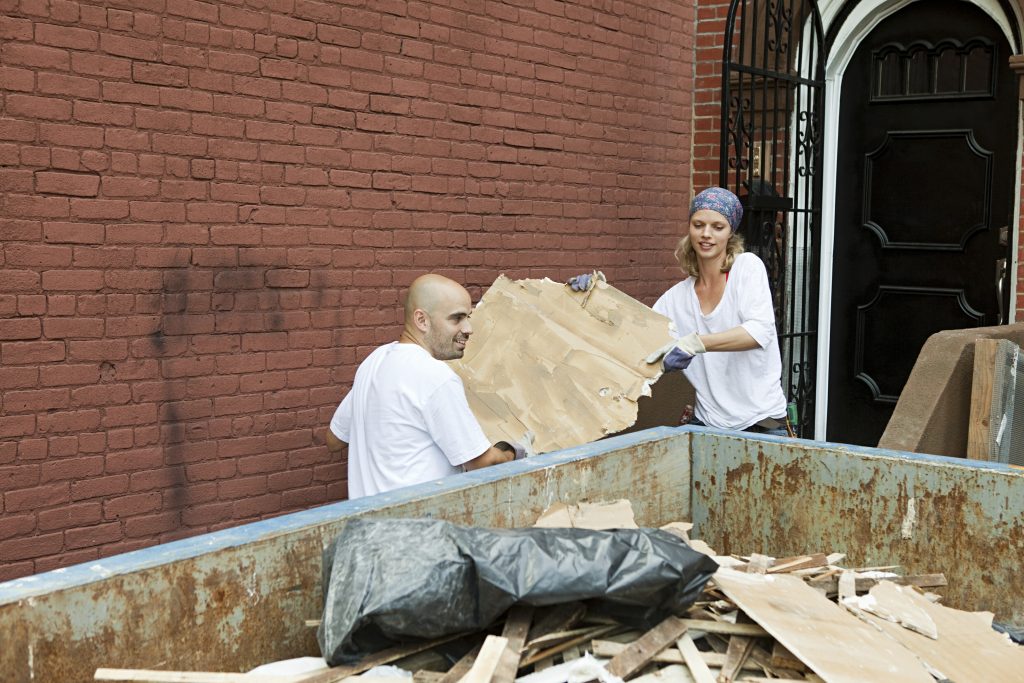
Instead, look for your “flats.” This includes old doors, sheets of plywood, flattened cardboard boxes, or even old area rugs. Lay these directly on the floor of the bin. This creates a solid, level foundation that mimics the floor of a moving truck.
By starting with a flat base, you ensure that subsequent layers sit flush against each other. This simple step eliminates the largest air pockets before they even start. If you are doing a renovation, save your old drywall scraps or flooring planks for this bottom layer.
The “Russian Doll” Nesting Technique
Think about the items you are throwing away. Many of them are hollow. An old dresser, a broken microwave, or a plastic storage bin is mostly empty air. If you just toss these in, you are paying Diamond Disposal to haul away the air inside them.
The pro secret is “nesting.” Before you put a hollow item in the bin, fill it with smaller debris. Fill those dresser drawers with old clothes or small kitchen gadgets. Put small bags of trash inside that old trash can you are discarding.
This method is the most effective way of maximizing bin space. It turns a bulky footprint into a high-density storage solution. Every time you find a void, ask yourself what smaller item could fit inside it. This turns your junk pile into a tightly packed puzzle.
Break It Down: The Death of Bulky Voids
If you have ever tried to pack a suitcase, you know that a folded sweater takes up less room than a balled-up one. The same logic applies to your junk. Furniture is designed to take up a lot of space in a room, but it shouldn’t take up that same space in a bin.
Grab a sledgehammer or a screwdriver and spend five minutes breaking down large items. A standing bookshelf might take up 15 cubic feet, but a flat-packed bookshelf only takes up two. Remove the legs from tables. Cut up large rolls of old carpet into smaller, manageable strips.
This does more than just save space; it also helps with weight distribution. Small, flat pieces are much easier to arrange than one giant, awkward frame. While The Uncluttered Life notes that letting go of these items can be hard, the physical act of breaking them down can actually be quite therapeutic during a big move.
The Weight Distribution Rule for Safety
The “Dangerous Debris” dread is a real concern for homeowners. You might worry that the bin will be too heavy for the truck or that it might tip during the loading process. These risks are easily managed by focusing on where the weight sits.
Try to keep the heaviest materials—like concrete, bricks, or heavy soil—centered in the bin or toward the front (the side closest to the truck cab). If all the heavy weight is at the very back, it can make the front of the truck lift off the ground when the driver tries to pick up the load.
Keeping the weight balanced also prevents the bin from shifting on your driveway. A balanced bin is a safe bin. If you are mixing heavy construction debris with light household junk, alternate layers to keep the load stabilized.
Leveling Off: Avoiding the Overfill Penalty
Safety regulations in Ontario are very strict about “unsecured loads.” When our drivers pick up your bin, they must be able to pull a heavy tarp over the top to prevent debris from flying out on the highway.
If your junk is sticking out two feet above the rim, we cannot legally transport it. This results in an “overfill” situation where you have to spend time removing items before we can return for a second attempt. This is a logistical headache that no one wants.
As you reach the top of the bin, focus on filling the small gaps with your final bags of trash. Use a rake or a shovel to level out the surface. The goal is a flat, even top that sits just below the metal rails. If you find you have more junk than space, it is better to stop and order a swap than to risk a safety violation.

The Role of Strategy in Junk Removal
When you look at our roll off bin options, you see the physical dimensions. But those dimensions only tell half the story. The other half is how you choose to fill that volume.
Strategic loading turns a stressful project into an organized one. It gives you a sense of control over the mess. Instead of a chaotic pile, you have a managed workspace. This mindset shift is often the difference between a project that takes a weekend and one that drags on for a month.
In places like Mitchell or Stratford, where driveways might be close to neighbours, a tidy bin also keeps the peace. A neatly loaded bin looks professional and responsible, whereas a messy, overflowing one can be an eyesore for the block.
When to Call for a Swap
Even with the best packing skills, sometimes the junk wins. If you find that you have used all these techniques and you are still only halfway through your garage, do not panic. The “Walk of Shame” only happens if you try to force the impossible.
It is always better to call and schedule a booking for a second bin or a “switch out” than to create a safety hazard. We work with your schedule to ensure the transition is seamless. Having a fresh, empty bin can often give you the second wind you need to finish the job properly.
Why Diamond Disposal Stands Apart
We don’t just drop off a box and leave you to figure it out. We want your project to be successful. That means providing you with the tools and knowledge to handle your waste responsibly. We understand the local landscape of Perth County, from the tight streets of downtown Stratford to the wider rural properties in the surrounding area.
Our drivers are experts at placement, but the packing is where you take the lead. By following these four techniques, you ensure a smooth pickup and a cost-effective experience. You avoid hidden fees, you protect your property, and you get the satisfaction of seeing that clutter disappear for good.
Planning Your Next Cleanout
Before your bin arrives, take a walk through your space. Identify your “flats” for the bottom layer. Identify your “nested” candidates. Have your tools ready to break down the big stuff. A little bit of planning on Friday makes for a much easier Saturday.
Waste management doesn’t have to be a mystery. With a 12-yard or 20-yard bin and a solid plan, you can tackle any renovation or decluttering project with confidence. You are in charge of the space—make sure you use every inch of it.
FAQs
What is the best way to load heavy items like appliances? Always place appliances like washers or dryers toward the front of the bin (the end that the truck hooks onto). If possible, surround them with softer junk to prevent them from sliding around during transport.
Can I put items over the top edge of the bin? No. For safety and legal reasons, all debris must be “level-full.” If items are poking out above the top rail, the driver cannot safely tarp the load, and the bin will be left on-site until it is leveled.
Should I flatten my cardboard boxes? Absolutely. Cardboard boxes are 95% air. If you don’t flatten them, you are wasting massive amounts of space. Flattened cardboard can be slid down the sides of the bin to fill narrow gaps.
How do I handle long items like lumber or pipes? Try to keep long items running parallel to the sides of the bin. If they are placed diagonally, they create large triangular voids underneath them that are very hard to fill.